
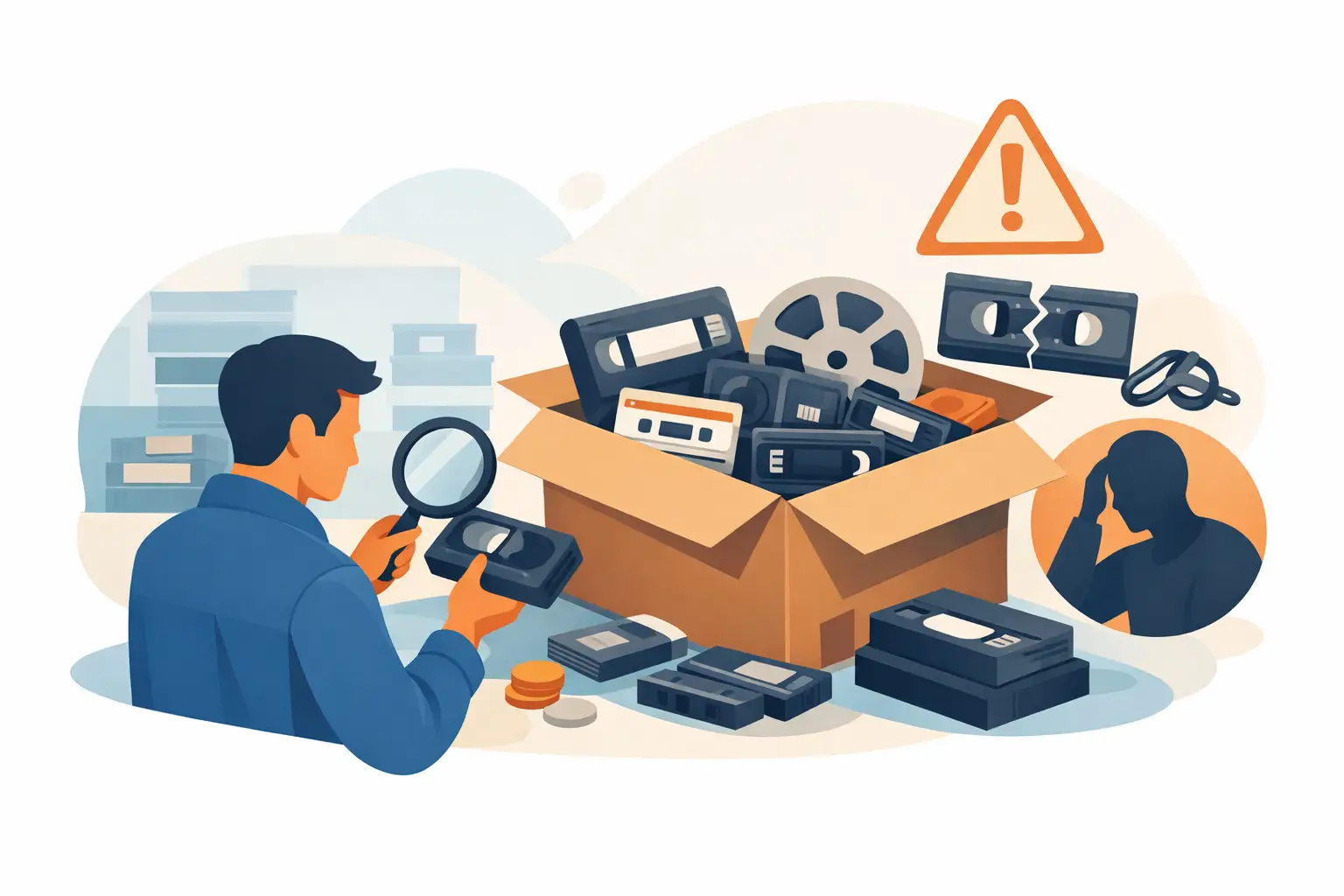
A photo of ten metal reels and a vague note that says “untested basement find” can either mean a smart score or a pile of unusable oxide. That is the reality of buying used tape lots. In reel-to-reel, value is rarely about how many reels are in the box. It comes down to formulation, storage history, width, condition, and whether the seller actually understands what they have.
For hobbyists, collectors, studios, and archives, used lots can be one of the few ways to find discontinued stock, odd sizes, or enough tape to support an ongoing project. They can also be the fastest way to end up with sticky-shed candidates, edge damage, spoking, mold, mislabeled reels, or tape that is simply wrong for your machine. The difference is not luck. It is evaluation.
Why buying used tape lots is different from buying single reels
A single reel listing usually gives you one thing to inspect. A lot multiplies the unknowns. Sellers often group tapes by brand name, by whatever was found in a studio cleanout, or by what physically fits in a carton. That means one lot can contain different formulations, different widths, mixed reel sizes, and very different storage histories.
The pricing can look attractive because the seller is moving volume, not certainty. That is why experienced buyers do not ask only, “How many reels?” They ask whether the lot is consistent. Ten reels of known, stable tape stored properly may be more valuable than thirty random reels from a garage shelf.
There is also a practical issue many buyers overlook. A tape lot is not just a purchase. It is a sorting project. If you do not have the time, equipment, or patience to inspect and test each reel, the savings on the front end may disappear quickly.
What actually determines value in a used tape lot
Brand matters, but less than many people think. A recognizable name on the box is only a starting point. What matters more is the exact tape formulation, the condition of the wound pack, whether the reel and box are original, and how the tape was stored across the years.
A lot of value is tied to usability. If you are buying for recording, you need tape that can run cleanly and predictably on your machine. If you are buying for archival transfer, the equation changes. You may accept a problem reel if the content is rare and recoverable. If you are buying empty take-up reels or boxes for restoration purposes, the recorded tape itself may matter very little.
This is where context matters. A lot of sealed NOS tape carries one kind of value. A lot of used studio reels with handwritten notes carries another. A lot of unknown consumer recordings may be worth buying only for the reels, hubs, or boxes. There is no single formula, which is why broad descriptions like “vintage tape collection” should never be enough on their own.
How to evaluate a listing before buying used tape lots
Start with the photos. You want clear images of reel flanges, tape edges, box labels, and any handwriting on the box. A good photo can tell you whether the lot is actually made up of matching stock or a random assortment. It can also reveal poor winding, popped strands, edge curl, water staining, rust, or contamination.
Next, look closely at how the seller describes condition. “Untested” is not automatically bad, but it does mean you should price the lot as a risk purchase. “Looks good to me” is not a condition report. More useful language includes where the tapes came from, whether they were climate-controlled, whether any reels were play-tested, and whether the seller understands tape widths and reel sizes.
Ask direct questions if the listing leaves gaps. Is the tape 1/4-inch, 1/2-inch, or 1-inch? Are the boxes matched to the reels? Are there signs of mold or shedding? Were these stored in a basement, attic, garage, studio, or office? A knowledgeable seller may not know everything, but they should be able to answer basic storage and identification questions.
Buying used tape lots by brand and formulation
This is where experience pays off. Some tape families are known to be more stable. Others are more likely to develop age-related problems. If the listing only says “Ampex” or “Scotch,” that is not enough. Different formulations under the same brand can behave very differently.
For recording use, buyers should care less about logo recognition and more about known performance patterns. Certain back-coated formulations are more likely to present sticky-shed issues. Some older consumer tapes may avoid that problem but bring other compromises, such as lower output, more print-through, or weaker mechanical condition. A reel that looks clean can still be a poor fit for your intended use.
That is why advanced buyers often treat unidentified formulations conservatively. If you cannot verify the stock, assume more testing will be needed. If the lot includes clearly labeled boxes and matching reels, that reduces uncertainty. If labels are missing, crossed out, or obviously mismatched, factor that into the price.
The red flags that should lower your offer
Storage history is one of the biggest factors in used tape quality. Heat, humidity, dust, and smoke exposure can do long-term damage even when a tape appears visually intact. A seller who says the lot came from a garage or attic is giving you useful information, and not in a good way.
Physical warning signs matter too. Uneven winding, cinching, lifted edges, cracked leader, mold spots, brittle splices, and rust on metal parts all suggest extra work and higher risk. Missing boxes are not a deal-breaker, but they remove a layer of identification and protection. Lots with heavy residue, strong odor, or obvious water damage should usually be approached as parts-only purchases.
There is also the issue of mixed inventory. A lot with random reel sizes, mixed widths, and several brands may still be worth buying, but only if you are prepared to separate usable stock from scrap. Buyers who need predictable, project-ready tape should be especially cautious with mixed lots.
When a used tape lot is worth buying anyway
Not every risky lot is a bad buy. Sometimes the price is low enough that the reels, boxes, or a handful of good tapes justify the purchase. Sometimes the lot includes rare widths or discontinued stock that are difficult to source individually. For archivists, even a compromised reel may be valuable if the recorded material is unique.
The key is matching the lot to your goal. If you need reliable recording media for immediate use, uncertainty is expensive. If you are buying for parts, restoration accessories, or content recovery, the same lot may make perfect sense. There is nothing wrong with buying a problem lot as long as you are buying it for the right reason.
This is where specialists have an edge. Buyers who understand grading, tape defects, and formulation behavior can separate a genuine opportunity from a false bargain. That is also why many customers prefer tested and categorized inventory from a dedicated source such as Reel to Reel Warehouse when the goal is dependable use rather than speculation.
A practical checklist for buying used tape lots
Before committing, think through five questions. Do you know the exact widths and reel sizes in the lot? Can you identify the formulations with reasonable confidence? Does the storage history sound acceptable? Are the photos good enough to inspect winding and labeling? And finally, are you buying for recording, archival transfer, collecting, or parts?
If you cannot answer most of those questions, the lot is not automatically bad. It just belongs in the gamble category, and your offer should reflect that. Too many buyers pay tested-tape prices for unverified bulk inventory. That is usually where the costly mistake happens.
The smartest way to think about price
Used tape lots are rarely worth what the seller believes based on reel count alone. A bulk listing should be priced on verified usability, not optimism. If only a portion of the lot appears identifiable and clean, value that portion first. Treat the rest as uncertain inventory.
Shipping also matters more than people expect. Large reels, metal reels, and full boxes add weight quickly. A cheap lot with high shipping can stop being cheap. Poor packing adds another layer of risk, especially for vulnerable flanges, boxes, and tape edges.
The best buyers stay disciplined. They do not overpay because a listing feels rare. They do not assume old studio stock is automatically high grade. And they do not confuse quantity with quality.
Buying used tape lots can be a smart move when you know exactly what you are evaluating and why you are buying it. The more specific your standards are, the easier it becomes to spot the lots worth chasing and the ones best left in someone else’s basement.