
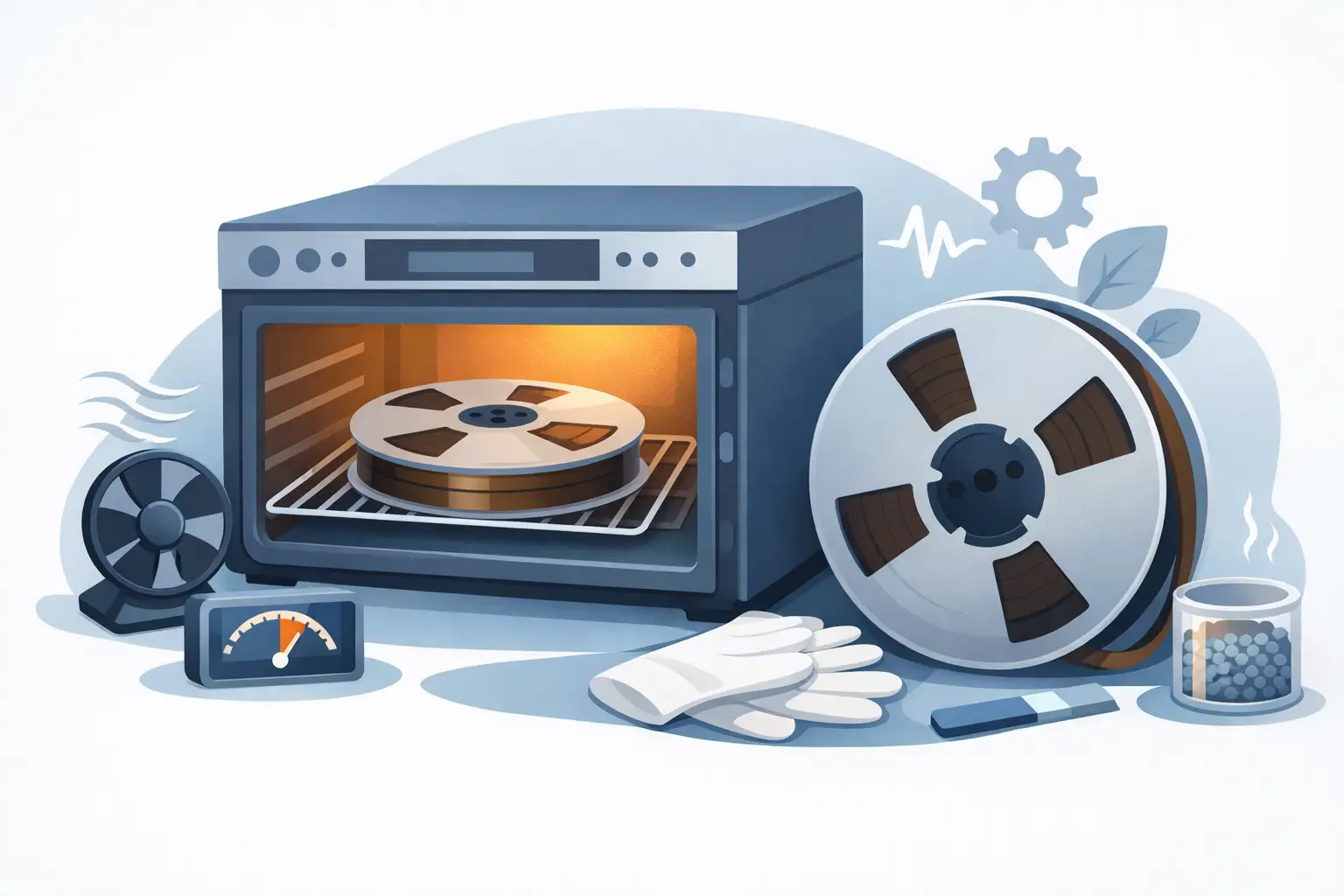
If a reel squeals, sheds oxide, or leaves gummy residue on guides within seconds, the first question is often can you bake reel tape and save the transfer. The short answer is yes – sometimes. But baking is a temporary recovery method for specific tape failures, not a general fix, and using it on the wrong tape can do more harm than good.
Can you bake reel tape – and when does it help?
Baking is used mainly for tapes affected by sticky shed syndrome. That condition is associated with certain backcoated polyester tapes, especially from the 1970s through the 1990s, where the binder absorbs moisture and becomes tacky. When that happens, the tape may squeal, slow down, clog heads, shed heavily, or stop moving through the transport.
In those cases, controlled low heat can temporarily drive out moisture and restore playability long enough to make a transfer. That is the goal. You are not repairing the tape in a permanent sense. You are creating a brief window to handle it safely and capture the content.
That distinction matters because many tape problems are not sticky shed. Acetate tape with vinegar syndrome, brittle splices, edge damage, cupping, stretch, or oxide loss will not be fixed by baking. Neither will tapes that are simply worn out from heavy use. If the symptom has been misidentified, baking wastes time and adds risk.
What baking reel tape actually does
The process uses gentle, stable heat over several hours to reduce moisture in the tape binder. On affected formulations, that can lower friction enough for one or a few careful passes. Archivists have relied on this approach for years, but always as a controlled preservation step, not a routine maintenance trick.
A lot depends on the tape formulation. Some brands and eras are much more prone to sticky shed than others. Backcoated studio tapes are common candidates. Older acetate tapes generally are not. If you do not know what stock you have, identify the brand, era, width, backing, and visible symptoms before you decide anything.
This is one reason experienced collectors and transfer engineers treat tape evaluation as seriously as machine setup. The tape itself tells you what kind of intervention is appropriate.
Signs your reel tape may need baking
A tape that needs baking usually announces the problem quickly. You may hear squealing from the pack or guides, see brown or black residue building on the heads after a short run, or watch the machine strain as if braking against the reel. Sometimes the tape plays briefly and then stalls. Sometimes it leaves sticky deposits almost immediately.
Those are stronger indicators than age alone. Old tape is not automatically a baking candidate. Many vintage reels remain stable, while some later formulations are notorious for binder breakdown.
If the tape plays cleanly, do not bake it just because you read that certain brands are risky. Unnecessary heat exposure is still exposure.
When you should not bake reel tape
This is where caution matters most. If the reel is acetate-based, warped, cracked, or showing a vinegar odor, baking is not the answer. Acetate requires a different preservation approach and can become more fragile with poor handling. If the tape has severe physical damage, broken leaders, bad splices, or obvious mold, those problems should be addressed separately.
You should also avoid improvised methods that cannot hold a low, stable temperature. Kitchen ovens are a bad choice because they cycle too widely, often run hotter than the dial suggests, and can create localized hot spots. A food dehydrator with verified temperature control is the tool most often used because it provides gentle airflow and a more predictable range.
There is also a practical limit to what baking can accomplish. If a reel has major oxide loss or deep edge damage, you may get it moving, but you will not restore missing signal.
How to bake reel tape carefully
If you have correctly identified sticky shed symptoms and choose to proceed, the usual approach is low heat, patience, and minimal handling. Typical working temperatures are often around 120 to 130 degrees Fahrenheit, with duration depending on reel size, tape width, and severity of the problem. Smaller reels may need less time, while larger archival reels often need much longer.
The critical point is control. You want steady, mild heat – not guesswork. Before placing any tape in a dehydrator, confirm the actual temperature with an independent thermometer. Built-in dials are not always accurate.
Leave the tape on its reel. Do not rewind it unnecessarily beforehand if it is already shedding or sticking. Remove anything obviously unsuitable for heat exposure if practical, but avoid disassembling a reel unless you know exactly what you are doing. After heating, let the tape cool fully to room temperature before attempting playback.
Even then, the next step is not casual listening. It is a transfer session. Clean the machine thoroughly, check path alignment and tension, and be ready to stop if shedding resumes. For a valuable master or unique field recording, the safest move is still professional transfer support rather than home experimentation.
Common mistakes that ruin recoverable tape
The biggest mistake is too much heat. More temperature does not mean better results. It means more risk to the binder, the pack, the reel, and any splices. The second mistake is using the wrong appliance. Household ovens, heat guns, sunny windows, and DIY warming hacks are all far too unpredictable.
Another common error is treating baking as a cure-all and then repeatedly reheating the same reel every time someone wants to play it. Because the effect is temporary, some users fall into a cycle of bake, play, rewind, rebake. That is hard on the tape and misses the point. Once a reel becomes playable, transfer it as completely as possible.
Misdiagnosis is just as damaging. A tape that squeals because of guide contamination or machine issues may not need baking at all. Likewise, a tape with weak splices may fail during handling regardless of binder condition. Good troubleshooting comes first.
How long does the effect last?
It depends on the formulation, storage environment, and the severity of breakdown. Sometimes you get a useful transfer window of days or weeks. Sometimes it is shorter. The point is not to extend shelf life indefinitely. The point is to recover the content while the reel is stable enough to run.
That is why preservation-minded users plan the playback chain before they bake. Machine serviced. Heads cleaned. Correct EQ and speed confirmed. Capture path ready. If you wait until after treatment to sort out those details, you can lose your best opportunity.
Is baking worth it for collectors and hobbyists?
Yes, when the tape is otherwise unplayable and the recording matters. For hobbyists, that might mean an irreplaceable live recording, a family reel, or a rare master dub. For archives, it may be the only practical way to recover endangered content from a problematic stock.
But there is a trade-off. Baking sounds simple when reduced to a temperature and a timer. In reality, the hard part is diagnosis. Knowing whether the reel is a true sticky shed case, whether the machine is safe for the attempt, and whether the tape should be transferred in-house or sent out – that is where experience matters.
For collectors buying used or refurbished stock, this is also a reminder that tape condition is never just about appearance. A reel can look clean and still have binder issues. Source quality, storage history, and honest grading matter. That is one reason knowledgeable suppliers such as Reel to Reel Warehouse are valuable to the market: they help users avoid avoidable problems before a reel ever reaches the deck.
The better question than can you bake reel tape
Can you bake reel tape? Yes, if it has sticky shed syndrome and you use controlled low heat with a transfer plan ready. But the better question is whether baking is the right response to the specific reel in front of you.
Tape preservation is rarely about one trick. It is about identifying the formulation, reading the symptoms correctly, respecting the limits of damaged media, and acting with a clear purpose. If baking gives you one clean pass to save a recording, that is a win. Treat that pass like it counts, because with aging analog tape, it usually does.