
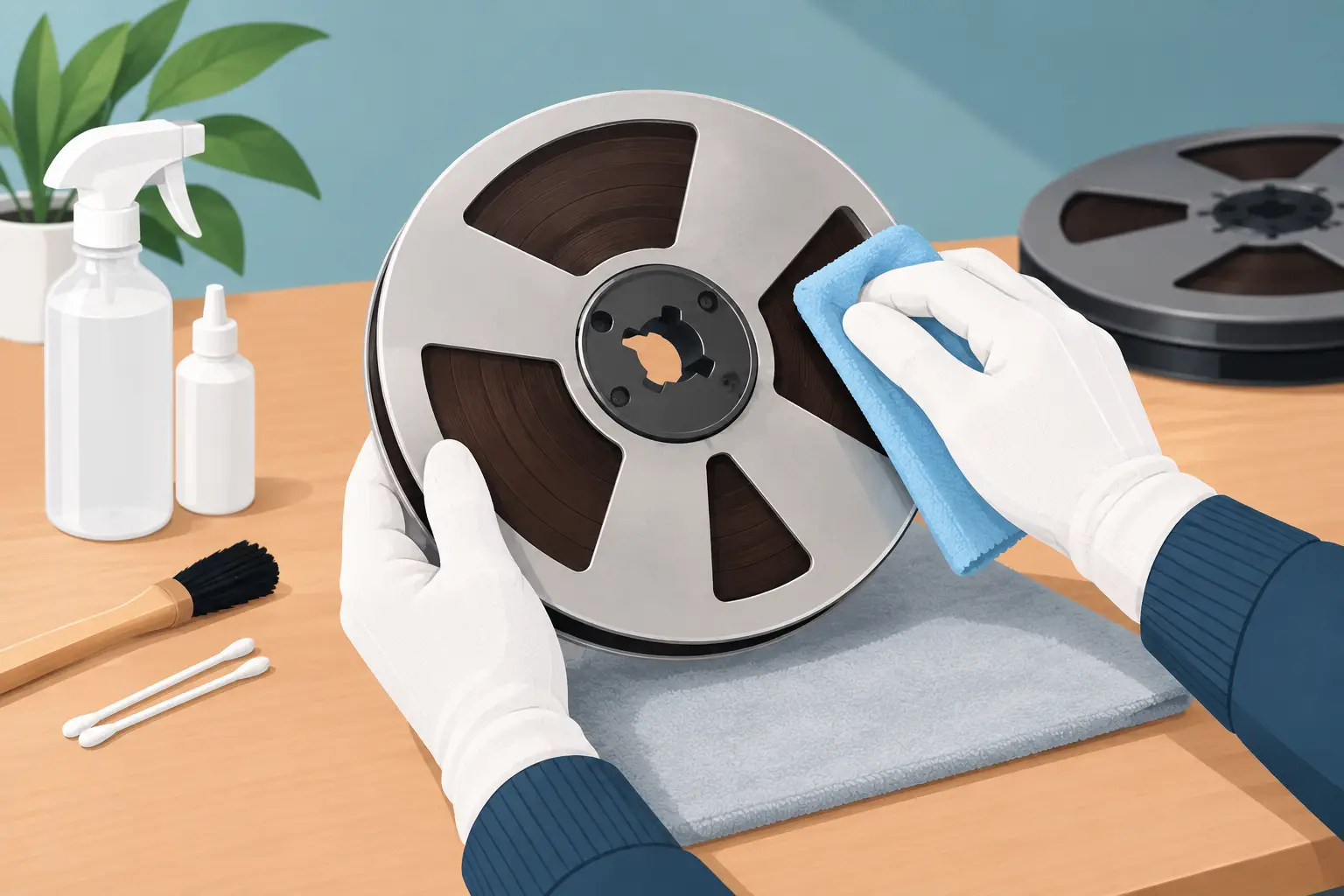
A dusty 10.5-inch metal reel can look like a simple cleanup job until a cloth catches the tape edge, a solvent softens an old label, or moisture reaches the tape pack. To clean vintage tape reels safely, treat the reel and the recorded tape as separate objects with different risks. The goal is not to make every reel look factory-new. It is to remove loose contamination, identify damage, and keep the tape stable for playback, storage, or transfer.
For collectors, recording enthusiasts, and archivists, careful cleaning also tells you something useful about the media itself. A warped flange, sticky residue near the hub, or dust packed into the reel can point to poor storage conditions long before the tape reaches a machine.
Start by Identifying What You Are Cleaning
The first question is whether you are cleaning an empty reel or a reel that still holds tape. Empty reels are generally straightforward, although material and condition still matter. A loaded reel requires a much more conservative approach because the tape pack, exposed tape edges, leader, splice points, and labels can all be damaged by an otherwise harmless cleaning method.
Vintage reels are commonly aluminum, plastic, or a combination of both. Aluminum reels may have painted, anodized, brushed, or bare-metal surfaces. Plastic reels vary widely by age and formulation. Some remain stable for decades, while others become brittle, cloudy, or prone to cracking. Older cardboard or fiberboard reels need the gentlest handling of all and should never be treated like washable plastic.
Before cleaning, inspect the reel under good light. Look for bent flanges, cracks around the hub, loose screws, sharp edges, corrosion, adhesive residue, mold, and labels that are lifting or becoming fragile. If tape is loaded, also check whether the tape pack is even and whether the outer wrap has loosened.
A reel with significant damage is not just a cosmetic issue. A bent flange can scrape tape edges during winding. A cracked hub can fail under tension. If the reel is structurally unsound, move the tape to a known-good reel only when you have the equipment and experience to do so safely.
The Safest Way to Clean Vintage Tape Reels
For most empty metal or stable plastic reels, dry cleaning should be the first step. Use a soft, clean microfiber cloth to lift surface dust from the flanges, hub, and spokes. Work gently, especially around stamped lettering, old decals, and sharp flange edges. A soft natural-bristle brush can help remove dust from corners and around the center hub.
If dry dusting is not enough, lightly dampen a cloth with clean water and wipe the reel surface. The cloth should be barely damp, not wet enough to leave standing moisture. Follow with a dry cloth immediately. This method is appropriate for many unpainted aluminum reels and durable plastic reels, but avoid wet cleaning around paper labels, adhesive-backed inventory stickers, and cardboard components.
For stubborn grime on a bare metal reel, a small amount of mild dish soap diluted in water can be used on the cloth, followed by a second cloth dampened only with water and then a full dry wipe. Keep moisture away from seams, hardware, labels, and any tape still on the reel. Never soak a vintage reel, submerge it, or spray cleaner directly onto it.
Cleaning products should be chosen cautiously. Household glass cleaners, abrasive powders, furniture polish, acetone, and strong solvents can discolor finishes, cloud plastic, strip printed markings, or leave residues. Isopropyl alcohol may be useful for certain bare metal surfaces, but it is not a universal reel cleaner. It can affect some plastics, coatings, inks, adhesives, and labels. Test any cleaner on a hidden area first, and do not use alcohol near a loaded tape pack.
Cleaning a Reel That Still Has Tape on It
A loaded reel should usually be cleaned only on its exposed surfaces. Dust the outer flange and hub with a soft cloth or brush while keeping your hand away from the tape edges. Do not wipe across the outer tape wrap, even if it looks dusty. A cloth can snag the tape edge or press debris into the pack.
If loose dust is visible on the tape pack, do not use compressed air. Air pressure can lift the outer wrap, drive particles deeper between layers, and create uneven tension. It is better to leave minor dust alone than to create a winding problem that damages the recording.
When the tape must be played or transferred, clean the tape path and machine components first. Properly cleaned guides, heads, rollers, and capstan surfaces do more to protect the tape than aggressive cleaning of the reel itself. If the tape shows mold, shedding, sticky residue, or a distorted pack, stop and assess its condition before attempting playback.
Labels, Writing, and Historical Value
A handwritten box label or a faded reel label may be more valuable than the reel’s cosmetic condition. It can identify a session, recording date, tape speed, track format, performer, or previous owner. Never scrub labels in an attempt to make them look cleaner.
For loose surface dust, use a dry, soft brush with minimal pressure. If a label is peeling, do not reattach it with ordinary household tape or glue. Adhesives can stain paper, migrate over time, and make future archival work harder. Photograph the label and record the information before moving or re-housing the tape.
The same caution applies to writing on reel flanges. Marker notes such as “15 ips,” “2-track,” or “master” may be critical technical information. A polished-looking reel with erased history is not an improvement.
When Grime Signals a Bigger Tape Problem
Not every dirty reel needs professional attention, but some conditions call for more than basic cleaning. Mold is one of the clearest examples. Fuzzy, powdery, or spotty growth can be a health concern and may spread to nearby media. Isolate the reel from your collection, avoid playing it, and do not brush mold indoors where spores can become airborne.
Sticky or oily residue around the tape pack can indicate adhesive failure, deteriorating leader tape, poor past storage, or tape binder problems. A sour, musty, or vinegar-like odor also deserves attention. Smell alone does not diagnose a tape formulation, but it can signal that the reel should be inspected before playback.
White oxidation on aluminum, corrosion on metal hardware, or sticky deposits on the hub can often be cleaned from an empty reel. However, if the contamination reaches the tape itself, the priority changes from appearance to preservation. Do not assume a tape can be safely played just because the reel has cleaned up well.
Storage After Cleaning Vintage Tape Reels
Once a reel is clean and fully dry, store it vertically in a properly sized box or protective case. The tape should be evenly wound, with the tape pack supported by an intact reel and protected from dust. Keep reels in a stable, moderate environment away from direct sunlight, attics, basements, exterior walls, and heating or cooling vents.
Avoid stacking heavy reels flat for long periods, particularly plastic reels and reels with thin flanges. Weight and heat can contribute to warping. If you use NAB hubs or adapters, inspect them regularly for burrs, cracks, or loose parts that could damage the reel’s center opening.
For an empty reel intended for reuse, make one final pass around the flange edge and hub. You are checking for anything that could contact tape during winding: grit, adhesive, corrosion, a raised screw, or a sharp burr. The reel does not need to be visually perfect. It needs to run true, support the tape pack, and present a smooth path for the tape.
A Practical Standard for Collectors and Archivists
The right level of cleaning depends on the reel’s purpose. A display reel can tolerate a little more cosmetic attention than a documented master tape. A used take-up reel needs to be clean and mechanically sound, while a rare recording may be best left largely untouched until it can be evaluated for transfer.
When in doubt, preserve information and stability over appearance. A clean reel is useful, but a reel that retains its original labels, runs without scraping, and protects the tape inside is the better result. Handle each reel as part of the recording system, not just as a piece of vintage hardware.