
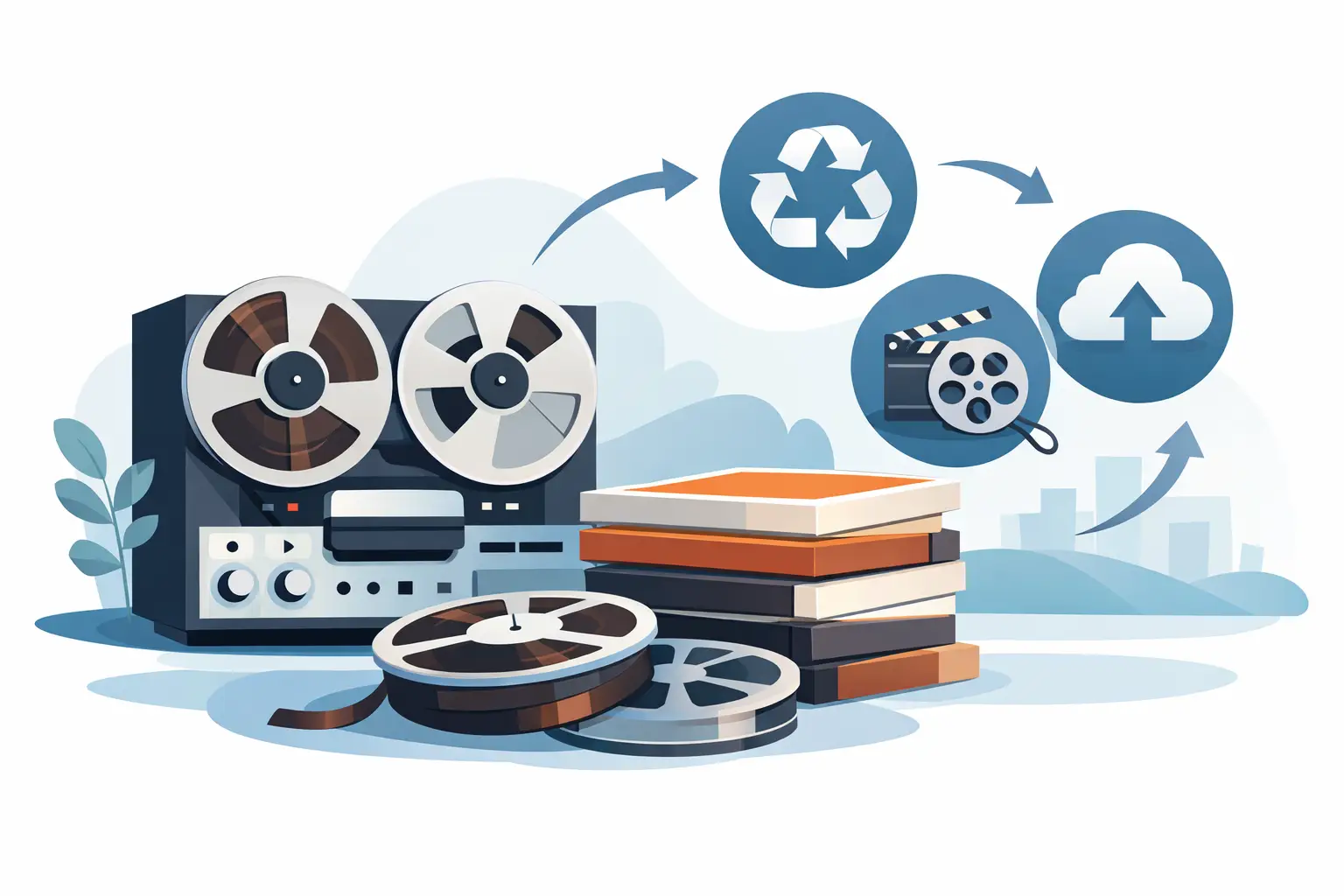
A box of old reel-to-reel tapes can be either a treasure chest or a maintenance problem, and sometimes it is both at once. If you are figuring out what to do with old reel to reel tapes, the right answer depends on what is actually on them, what condition they are in, and whether your goal is preservation, playback, resale, or reuse.
The biggest mistake is treating every tape the same. Some reels contain family recordings, live performances, radio airchecks, studio masters, or field recordings that cannot be replaced. Others are blank stock worth keeping in service if the tape formulation is stable. And some tapes are simply too degraded, poorly stored, or too low in value to justify restoration. A careful first look saves money, time, and sometimes irreplaceable audio.
Start by identifying what you have
Before you play anything, inspect the basics. Look at the box, any handwriting, the reel size, tape width, and brand. A 1/4-inch home recording tape is a different proposition from a 1/2-inch studio reel or 1-inch multitrack stock. Label information may tell you speed, track format, recording date, or whether the tape was used for music, voice, or backup copies.
Brand and era matter because certain formulations are known for age-related problems. Some older tapes remain very usable. Others can suffer from binder breakdown, oxide shedding, edge damage, or sticky-shed behavior. If you do not know the formulation yet, do not assume it is safe to thread up just because it looks clean through the box window.
It also helps to separate your reels into broad groups. Put clearly labeled personal or historical recordings in one group. Put blank or possibly reusable tape in another. Put damaged, moldy, unlabeled, or questionable reels in a third. That one step makes the rest of the process much more manageable.
What to do with old reel to reel tapes before playback
If the tape has been sitting for decades, resist the urge to play it immediately. A deck in perfect working order can still damage a compromised reel, and a deck that needs service can damage even a good one.
Start with a visual inspection. Look for loose winding, popped strands, cinching, cracked leader, warping, and white or brown residue inside the box. Smell can be informative too. A strong musty odor may suggest poor storage or mold. A reel that feels gummy, squeals during movement, or leaves residue on guides may have binder issues.
Check the reel itself. Bent metal reels, cracked plastic hubs, and warped flanges can cause transport problems. If the tape pack looks uneven or sloppy, it may need careful handling before any playback attempt. Archivists often move slowly here for a reason. The tape only gets one first pass in unknown condition.
If you own a machine, make sure it is the correct format and in proper adjustment. Track format, speed capability, tension, brakes, heads, pinch roller condition, and clean tape path all matter. Old audio is often lost not because the tape was bad, but because the playback deck was not ready.
Decide whether the tape should be preserved, reused, sold, or discarded
This is the real answer to what to do with old reel to reel tapes. The tape’s content and condition should drive the decision.
Preserve tapes with unique recordings
If the reel contains family voices, original music, spoken interviews, airchecks, church recordings, research audio, or any master material, preservation comes first. Even if you plan to keep the analog original, digitizing it is usually the safest long-term move. Magnetic tape does not improve with age, and the number of properly maintained machines keeps shrinking.
For important recordings, use the least invasive path possible. That often means professional transfer if the tape is rare, fragile, or tied to a known problem formulation. A clean transfer done once is better than multiple amateur attempts on an uncertain machine.
Reuse only tapes that are good candidates
Some old reels can still serve practical use, especially if they are blank, lightly used, or professionally refurbished. But reuse is not automatic. A tape that shows shedding, instability, splice failure, or audible transport issues is not worth risking on a good deck.
For users who still record in analog, reusable stock can be valuable, but compatibility matters. Width, reel size, formulation, recording purpose, and machine alignment all come into play. A hobbyist making casual recordings may accept a different level of risk than an archivist or someone tracking serious music sessions.
Sell tapes with collector, archival, or practical value
There is an active market for certain brands, widths, empty reels, factory boxes, NAB hubs, and usable old stock. Pre-recorded tapes may also interest collectors, though condition and title matter a lot. Studio-format tape and harder-to-find widths can have value beyond what casual sellers expect.
That said, unlabeled home recordings generally have little resale appeal unless they document something historically significant. Blank tape can be worth more than recorded tape in many cases, especially if the stock is desirable and has been stored well.
Discard only after you rule out value
If a tape is moldy, physically damaged, extensively shedding, or has no meaningful content and no reusable value, disposal may be the right outcome. But it should be the last step, not the first. Many reels that look ordinary still have parts value, collector value, or archival importance.
When digitizing makes the most sense
Digitizing is often the best answer when the recording matters more than the medium. That is especially true for one-of-a-kind content. Once transferred properly, the audio can be backed up, restored lightly if needed, and shared without repeated stress on the original reel.
A good transfer starts before the record button. The tape may need leader repair, splice replacement, careful rewinding, or in some cases treatment for known condition issues. Playback speed and EQ standard must match the source. A technically clean transfer preserves more than just sound – it preserves context, tone, and intelligibility.
If the material is valuable and the reel condition is uncertain, professional help is usually cheaper than replacing what gets lost through a bad playback attempt. If the tape is a common noncritical recording and you have the right deck, a careful home transfer can still be reasonable.
How to store old reel-to-reel tapes if you are keeping them
Proper storage is not glamorous, but it is one of the most useful things you can do. Keep tapes upright, not stacked flat for long periods. Store them in a stable, cool, dry environment away from heat, direct sunlight, dust, and magnetic sources. Basements, garages, and attics are common places people find reels, and they are also common places where reels age badly.
Use clean boxes and label clearly. If a tape has important content, note the speed, track format, approximate date, and any known issues. That information helps the next playback or transfer go smoothly. It also prevents unnecessary handling by someone trying to guess what is on the reel.
If the reel has a damaged box but the tape is worth keeping, rehousing it is sensible. The same goes for broken leader or old splices. Small physical problems become larger problems when ignored.
What not to do with old reel to reel tapes
Do not fast-forward a mystery reel at full speed just to see what happens. Do not clean tape with household products. Do not assume every old tape can be baked, and do not treat baking as a cure-all. It is a specialized response to certain binder-related issues, not general maintenance.
Do not erase recorded reels until you are certain the content has no value. This sounds obvious, but many historically important and personally meaningful recordings were lost because a reel looked unimportant from the outside. Labels fall off. Boxes get swapped. Handwriting fades.
And do not overlook the value of the reel, box, or hardware even if the tape itself is poor. In this market, accessories and format-specific supplies matter.
A practical path forward
If you have a small pile of reels, start with triage. Identify, inspect, sort, and decide which ones deserve preservation first. If you have a larger collection, work in batches and keep notes. That is how serious enthusiasts and archivists avoid chaos.
For blank stock, empty reels, or reusable tape, it pays to work with a specialist market that understands formulation, grading, and format-specific needs. That is where a focused supplier such as Reel to Reel Warehouse fits naturally into the process, especially when you are trying to separate genuinely usable inventory from tape that only looks serviceable.
Old reel-to-reel tapes are not just obsolete media. They are recordings, raw materials, artifacts, and sometimes the only copy of a moment you cannot recreate. Handle them like they still matter, because many of them do.