
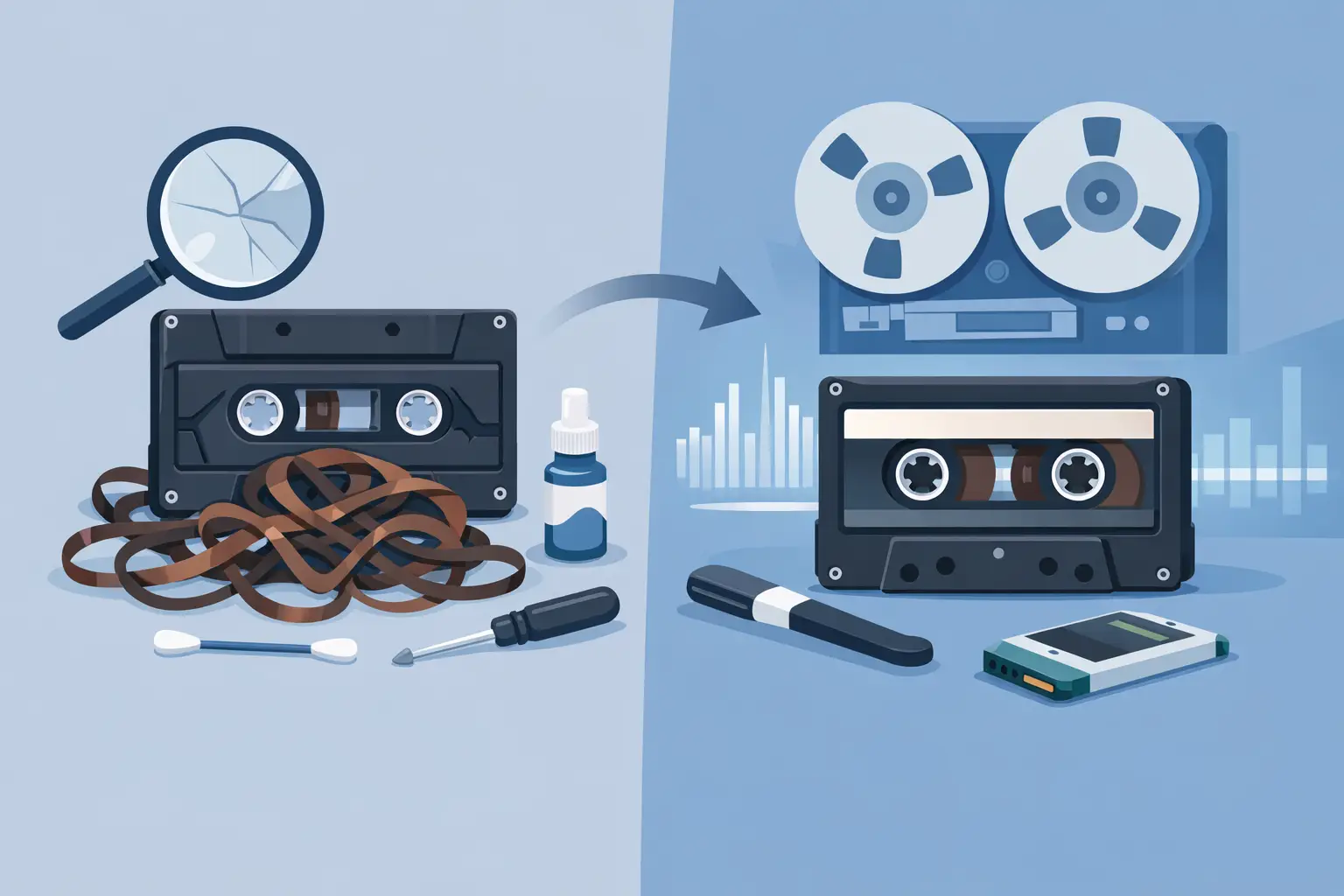
A reel that has been sitting untouched for 40 years can look perfectly promising until it reaches the heads. Then it squeals, sheds brown residue, sticks to itself, or snaps at an old splice. So, can old tape be restored? Sometimes – but “restored” needs a careful definition. Certain problems can be stabilized long enough for safe playback and transfer. Others can be repaired mechanically. Some tapes, however, are already too chemically unstable to risk running.
For collectors, recording enthusiasts, and archivists, the goal is rarely to make vintage tape new again. It is to preserve the recorded material, avoid damage to a valuable machine, and make smart decisions about whether a reel belongs in the playback queue, the repair bench, or long-term storage.
Can Old Tape Be Restored Without Damaging It?
Old reel-to-reel tape is not one material with one failure mode. Its condition depends on the base film, binder formulation, storage history, tape brand, and how often it has been played. A 1950s acetate reel and a 1980s back-coated studio master may both be “old tape,” but they require very different handling.
The most realistic answer is that old tape can often be stabilized, repaired, cleaned, or transferred. Full restoration, in the sense of reversing chemical age or returning original physical properties, is usually not possible. A treatment may make one controlled playback feasible, but it does not erase the cause of deterioration.
That distinction matters. An aggressive attempt to get a reel running can permanently damage oxide, stretch the base film, contaminate guides and heads, or tear an irreplaceable recording. When the content matters, preservation comes before convenience.
Identify the Failure Before Choosing a Treatment
Never diagnose tape by age alone. Inspect the reel under good light and gently handle only the leader or outermost exposed section when possible. Look for uneven winding, edge damage, loose packs, discoloration, old adhesive, mold, or a white powdery surface.
Sticky-shed syndrome
Sticky-shed syndrome is one of the best-known problems with certain polyester-based tapes, particularly some professional formulations made from the 1970s through the 1990s. Moisture absorbed by a deteriorating binder can cause the tape to feel tacky, squeal during playback, deposit residue on guides, and stop moving smoothly.
For a tape confirmed or strongly suspected to have sticky-shed, controlled low-temperature baking is often an effective temporary stabilization method. Done correctly, it can allow a careful transfer or playback. It is not a permanent cure. The tape may gradually reabsorb moisture and require treatment again before a future playback.
Acetate deterioration and vinegar syndrome
Many early reel-to-reel tapes use cellulose acetate base film rather than polyester. Acetate can become brittle, shrink, curl, or develop a vinegar-like odor as it degrades. This is commonly called vinegar syndrome.
Do not assume baking is appropriate for acetate tape. Heat does not reverse acetate decay and may increase the risk of distortion or breakage. If a reel smells strongly of vinegar, shows heavy cupping, or feels fragile, isolate it from other media and consult a qualified preservation specialist before attempting playback.
Physical damage, bad splices, and poor winding
Not every problem is chemical. A reel may have leader tape that has detached, dried-out splices, a creased section, edge curl, or a loose and uneven tape pack caused by storage or a previous machine issue. These problems can often be addressed with patient mechanical work.
Old splices should be evaluated one at a time. A failed splice can be replaced with archival-quality splicing tape, but the repair must preserve the tape’s direction and edit point. Household adhesive tape, rubber cement, and unknown old tape are poor substitutes. Their adhesives can migrate, dry out, or leave residue across the tape path.
When Tape Baking Can Help
Baking has earned a deserved place in audio preservation, but it is not a universal solution and should not be treated casually. It is intended primarily for certain binder-related sticky-shed problems on polyester tape.
A purpose-built food dehydrator or laboratory-style controlled warming setup is preferable because it provides steady, low heat and air circulation. A kitchen oven is not appropriate. Its thermostat may cycle far beyond the intended temperature, and localized hot spots can warp reels, damage tape, or create a serious safety issue.
The needed temperature and duration depend on tape width, reel size, formulation, and the severity of the problem. Many preservation workflows use low, carefully monitored temperatures in the general range of 120 to 130 degrees Fahrenheit, with treatment times ranging from several hours to a day or more. Large reels and wide formats may need longer. When in doubt, use a conservative approach or seek professional assistance.
Before any heating treatment, remove paper labels if they are at risk, inspect the reel for plastic parts that could deform, and document what you have. After treatment, let the reel cool and acclimate before playback. Plan the transfer in advance. A baked tape should not be repeatedly auditioned just because it is finally running quietly.
What You Can Repair at Home
Experienced hobbyists can safely handle a limited set of repairs when they have a clean workspace, proper tools, and a tape machine in excellent condition. Replacing a failed leader splice, repairing an accessible break, and correcting a loose tape pack are reasonable tasks for many users.
A careful respool or rewind can improve a loose pack, but only if the tape is otherwise stable and the machine has clean, properly aligned guides. Use low, even tension. Stop immediately if the tape squeals, sticks, sheds, or shows signs of edge damage. Fast winding a compromised reel can turn a manageable issue into a stretched, cinched, or torn recording.
Cleaning should be equally restrained. Dust on the reel flange or storage box can be removed gently, but do not apply household cleaners, lubricants, or solvents to recording tape. Solvents can affect binders, erase markings, and spread contamination. If a tape is shedding, clean the machine’s tape path before and after use rather than trying to wipe the reel while it is moving.
Playback Is a Preservation Event
When an old reel contains unique music, interviews, field recordings, or masters, its next successful playback may be its most valuable one. Treat that session as a transfer project, not a casual listening session.
Start with a machine that is mechanically sound, clean, demagnetized where appropriate, and compatible with the tape’s speed, track format, equalization, width, and reel size. A 1/4-inch consumer tape, a 1/2-inch multitrack master, and a 1-inch format reel are not interchangeable simply because each is reel-to-reel tape. Incorrect setup can lead to poor sound at best and physical damage at worst.
Monitor the tape path continuously during the first pass. Watch for oxide shedding, speed instability, stiction, and pack problems. Capture the recording at high resolution if it is valuable, and make a working copy for routine listening. The original should then return to stable storage rather than being used as the everyday playback source.
When Not to Attempt Restoration
There are clear situations where restraint is the best skill an owner can bring. Stop and get specialist help if the tape has active mold, severe vinegar odor, extensive brittleness, severe curl, obvious water damage, severe oxide loss, or a history of failed playback attempts. The same applies to tapes with one-of-a-kind content and no room for error.
Mold deserves particular caution. It can pose a health concern and contaminate machines, nearby reels, and work surfaces. Bag and isolate the reel rather than putting it on a deck. A professional can assess both the media and the safest cleaning or transfer approach.
Store the Reels You Save Correctly
The best restoration is often preventing the next round of damage. Store tapes upright on their hubs in clean boxes, away from direct sunlight, attics, basements, radiators, and large swings in temperature or humidity. Keep them away from strong magnetic fields and avoid stacking reels flat for long periods when practical.
A stable, moderate environment is more useful than chasing perfection. Good storage slows deterioration, protects the tape pack, and gives you a better chance of successful playback years from now. For uncertain reels, clear condition notes and a separate quarantine area can prevent a questionable tape from becoming a surprise later.
Old tape rewards patience. Whether a reel needs a new splice, a controlled bake before transfer, or simply a better storage box, the right move is the one that protects both the recording and the machine that will play it. When you need help identifying a tape formulation or locating dependable replacement stock, Reel to Reel Warehouse is built around the formats and practical knowledge this medium demands.