
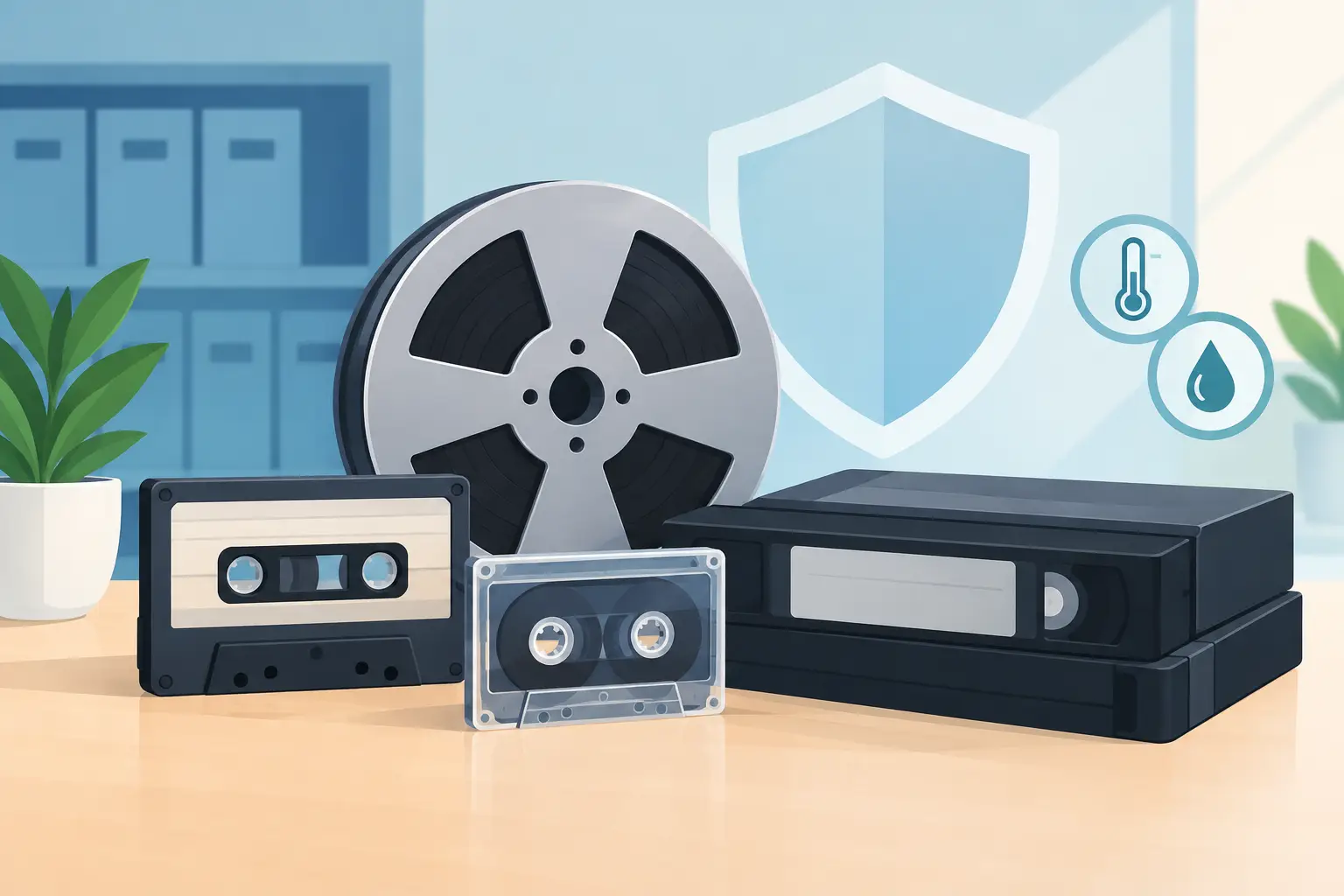
A reel of tape can look perfectly ordinary while carrying the only surviving copy of a live performance, family voice, radio broadcast, or master recording. The top ways to preserve recorded tapes are not complicated, but they do require consistency. Magnetic tape is a physical recording medium, and its condition is shaped by storage, handling, playback equipment, and the tape formulation itself.
For reel-to-reel users, preservation starts with a practical goal: keep the original tape stable and playable without creating new damage. That means resisting the urge to play an unknown reel immediately, avoiding extreme storage conditions, and recognizing when a tape needs professional attention before it goes near a machine.
Top Ways to Preserve Recorded Tapes
Keep temperature and humidity stable
Tape does best in a clean, climate-controlled area with moderate, stable temperature and relative humidity. For most home collections, a cool interior closet or dedicated room is far safer than an attic, garage, basement, storage shed, or exterior wall cabinet. The biggest problem is often fluctuation rather than a single imperfect reading. Repeated cycles of heat, cold, and humidity can stress the binder, leader, box, and reel.
Avoid storing reels near radiators, HVAC vents, windows, water pipes, or equipment that runs hot. Humid conditions can encourage mold and corrosion, while excessive heat can accelerate binder breakdown and print-through. Very dry environments are not ideal either, particularly when static makes tape attract dust.
A reasonable target for a personal collection is a consistently cool room with moderate humidity, rather than an attempt to build a museum vault. If your tapes include irreplaceable masters or institutional material, tighter environmental controls may be worthwhile. The priority is stability.
Store reels upright, fully supported, and away from magnets
Reel-to-reel tapes should generally be stored vertically, like records on a shelf, rather than stacked flat in tall piles. Vertical storage reduces pressure on the lower reels and helps prevent flange warping. Use shelves that support the box or container evenly, and do not pack tapes so tightly that removing one damages its neighbors.
Keep tapes in their original boxes when those boxes are clean, intact, and free of mold. If a box is crushed, water-damaged, or shedding debris, replace it with a clean archival-quality container sized for the reel. The reel itself should be protected from dust, light, and accidental impact.
Magnetic fields remain a concern, although ordinary household exposure is often overstated. Do not place tapes directly beside power transformers, large speakers, motors, bulk tape erasers, or other strong magnetic sources. More immediately damaging hazards include water, smoke, pets, and a shelf that can be bumped or tipped over.
Rewind tapes properly before putting them away
A tape that has been stopped mid-program or loosely wound is more vulnerable to edge damage, pack distortion, and uneven tension. Before long-term storage, wind the tape onto a clean reel at a controlled, even speed. A smooth tape pack has aligned layers and no obvious ridges, popped strands, or telescoping.
For many collections, storing a tape tails out is a sensible practice. In this position, the program has been wound through once after playback, and the tape is left at the end of the recording. Any print-through that develops is more likely to be heard as pre-echo rather than post-echo, which is usually less distracting. It also encourages a full rewind before the next play.
The right choice can depend on your workflow. A tape frequently used for reference may need a labeled head-out position for convenience. A preservation master that will sit untouched for years is a different case. What matters most is a neat, even pack created on a well-maintained machine.
Handle only the reel and hub whenever possible
The oxide-coated tape surface is not the place for fingerprints. Oils, dirt, lotion, and moisture can transfer to the tape and may affect playback or accelerate contamination. When loading a reel, hold the hub or outer reel edges. Keep food, drinks, and smoking materials away from the work area.
Use a clean, uncluttered table when inspecting or threading tape. If you need to touch the tape itself, clean nitrile gloves can be useful, but they are not mandatory for every routine task. Many experienced operators find that clean, dry hands and disciplined handling provide better control. Gloves become more useful when working with moldy material, damaged tape, or a reel that must be handled extensively.
Never pull tape abruptly from a reel, and do not use ordinary adhesive tape to repair a break. Splices require proper splicing tape, a suitable block, and a clean cut. A poor repair can snag in the tape path or damage a playback head.
Inspect Before You Play
A visual and odor check can prevent a great deal of trouble. Look for white, gray, or fuzzy mold; powdery deposits; warped flanges; cracked hubs; splices that are lifting; and a tape pack that appears uneven. Smell matters too. A sharp vinegar odor can indicate acetate base deterioration, while some affected polyester tapes may have a sour or chemical smell associated with binder issues.
Do not assume every old tape is unsafe. Many vintage reels remain very playable when stored well. The point of inspection is to identify warning signs before the tape passes over guides, heads, and capstans.
Watch for sticky-shed symptoms
Certain tape formulations are susceptible to sticky-shed syndrome, a binder breakdown that can cause squealing, shedding, sticking, and poor tape transport. During playback, the tape may leave residue on guides and heads, slow down, or stop moving altogether. Forcing it through the machine can damage the recording and contaminate the deck.
If a tape shows these symptoms, stop playback. The proper treatment depends on the tape stock, its condition, and the value of the recording. Controlled baking is sometimes used by qualified professionals as a temporary stabilization step for certain polyester-backed tapes, but it is not a universal home remedy. It is not appropriate for every formulation, and incorrect temperature or timing can cause irreversible harm.
Acetate tape presents a different set of risks. It may become brittle, shrunken, or smell strongly of vinegar as the base deteriorates. Trying to tension or rewind a fragile acetate reel like a modern polyester tape can cause breaks. When in doubt, isolate the reel, document its condition, and seek help before attempting transfer.
Maintain the Machine That Touches Your Tape
Even a healthy tape can be damaged by a neglected recorder. Before playback, clean the tape path using materials appropriate for your machine: heads, guides, capstan, pinch roller area, and other contact points should be free of oxide buildup and residue. Follow the deck manufacturer’s guidance, especially around rubber parts, since some solvents can cause damage.
Demagnetize only when needed and with the correct procedure. A poorly used demagnetizer can create problems rather than solve them. More often, the immediate preservation benefit comes from clean heads, correct tape tension, a healthy pinch roller, and transport components that do not scrape or wrinkle tape.
Take time to confirm that the machine is compatible with the reel. Tape width, track format, equalization, speed, reel size, hub type, and recording direction all matter. A 1/4-inch consumer stereo tape, a 1/2-inch multitrack reel, and a 1-inch professional-format tape are not interchangeable. Playing a rare tape on the wrong setup may not physically destroy it, but it can lead to incorrect handling, unnecessary rewinds, or a failed transfer attempt.
Clean after every questionable reel
If a tape sheds oxide or leaves residue, clean the tape path before playing anything else. This protects the next reel and makes it easier to identify whether the issue came from the tape or the deck. Keep notes on problem tapes, including brand, reel size, approximate date, symptoms, and any playback history. That information becomes valuable when deciding how to transfer or treat the recording later.
Digitize Important Recordings, but Preserve the Original
Digitization is one of the most useful preservation actions available, particularly for recordings that are unique, deteriorating, or frequently requested. A high-quality digital transfer reduces the need to replay the original tape and creates a practical access copy for listening, editing, or sharing.
Still, digitization is not a reason to discard the reel. The original tape may contain information that a future transfer system can recover more accurately, and digital files require their own preservation plan. Keep at least two copies of transfer files in separate locations, use clear filenames, and document speed, track format, equalization, date, equipment, and any issues heard during playback.
For valuable recordings, avoid making the first transfer on an unfamiliar or unserviced deck. The transfer chain matters. A properly aligned machine, clean tape path, stable capture setup, and accurate format identification can make a meaningful difference in the result.
Label Clearly and Keep a Basic Inventory
A tape without context loses much of its value. Label the box, not the tape surface, with the title, date, speed, track format, recording direction, and any known technical notes. Use a pencil or archival-safe label system rather than writing aggressively on old cardboard boxes. If a reel already has original notes, photograph or transcribe them before replacing the container.
A simple spreadsheet is enough for many private collections. Record the location of each reel, its condition, whether it has been digitized, and whether playback has been tested. This saves time when you are searching for a particular session or trying to prioritize tapes that need attention.
The best preservation routine is the one you can maintain: stable storage, careful inspection, a clean machine, and a plan for recordings that cannot be replaced. When a tape is rare, damaged, or simply too important to risk, pause before pressing Play. A little patience now may be what keeps that recording available for the next generation of listeners.