
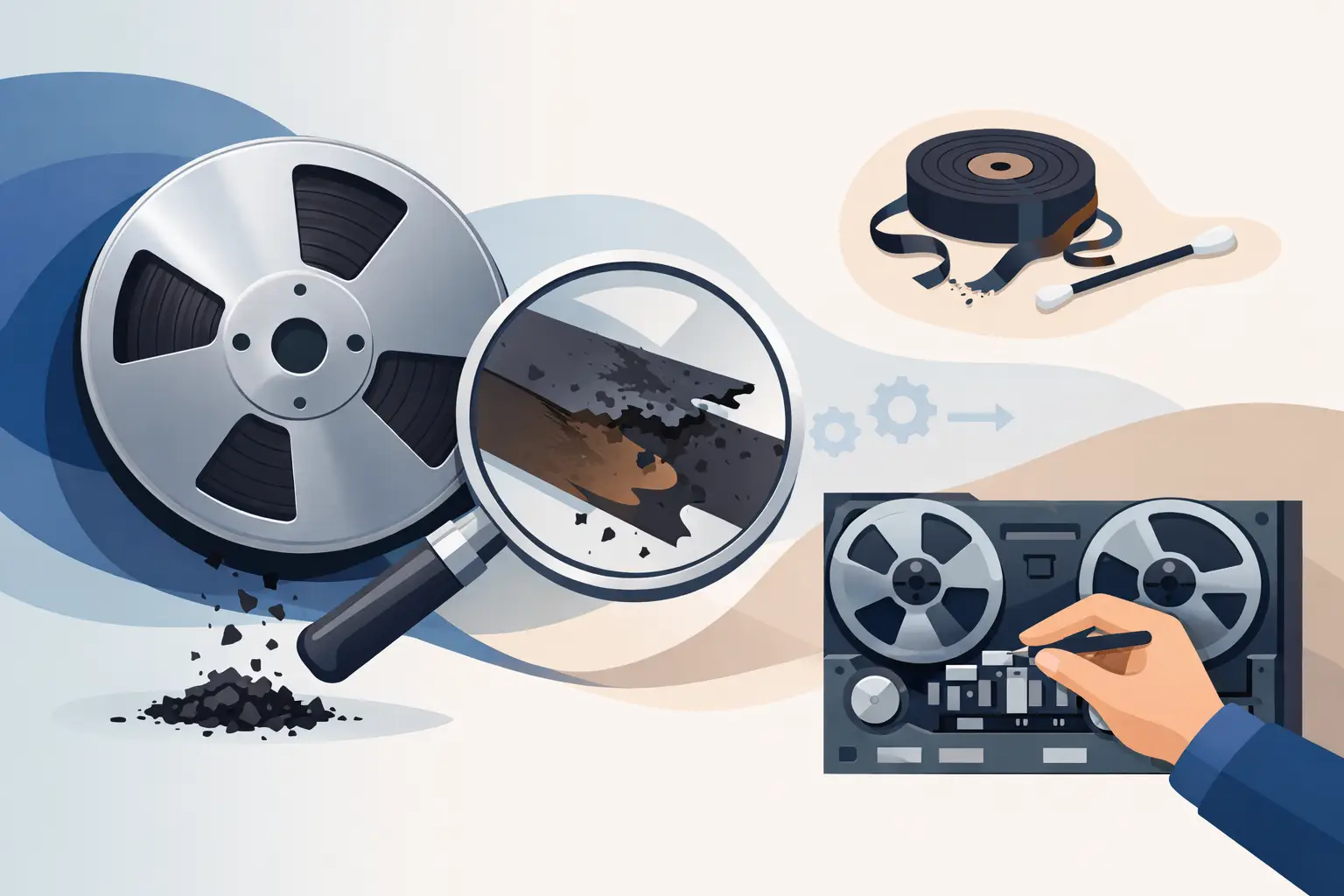
A brown or black deposit on a tape head after a pass is never something to ignore. If you are asking, why does reel tape shed oxide, the short answer is that the magnetic coating is no longer holding together as it should – or the tape is being damaged by its path through the machine. The right response depends on which of those problems you have. Continuing to play a shedding reel can clog heads, cause squealing and dropouts, and in severe cases permanently damage a recording.
What oxide shedding actually means
Reel tape is a layered product. The clear base film, usually polyester or acetate on older stock, carries a magnetic coating made from iron oxide particles, binder, and lubricants. The oxide is the part that stores the audio. When that coating begins to release particles, they collect on heads, guides, capstans, and pinch rollers as reddish-brown, dark brown, or black residue.
A tiny amount of dust after playing an old reel does not always mean the tape is failing. Vintage tapes can carry surface contamination, and a dirty machine can make a healthy reel look suspect. But visible buildup after only a few minutes, especially when it returns immediately after cleaning the tape path, is a warning sign.
The key question is whether the tape is losing oxide because its binder has deteriorated or because something mechanical is scraping the surface. Those failures can look similar at first, but they require very different handling.
Why does reel tape shed oxide? The main causes
Binder breakdown and sticky-shed syndrome
The best-known cause is binder hydrolysis, commonly called sticky-shed syndrome. Certain polyester-backed tape formulations absorb moisture over decades. That moisture changes the binder that holds the magnetic particles together, leaving the tape surface tacky, soft, and prone to depositing residue.
A sticky-shed tape may squeal as it passes over the heads, slow down or stop on the transport, stick to guides, or leave heavy deposits almost immediately. You may also see dull streaks, uneven winding, or sections that seem to grab themselves on the reel.
This is not simply “old tape.” Many old tapes remain perfectly playable, while some particular formulations are much more susceptible. Storage in heat and humidity can accelerate the condition, but it is usually tied to the tape’s chemistry as well as its storage history.
Dry shedding and lubricant loss
Not every shedding tape is sticky. Some tapes become dry, abrasive, or powdery as their lubricant migrates or the coating becomes brittle. Instead of a gummy deposit, the machine may collect fine brown dust. Playback can sound scratchy, distorted, or intermittently muffled as oxide debris contaminates the heads.
Dry shedding is especially concerning because the tape may still appear to move normally. A reel that does not squeal is not automatically safe to keep playing. If residue keeps appearing, stop and determine whether the tape is mechanically abrading against the deck or deteriorating on its own.
Dirty, worn, or misaligned tape paths
A healthy tape can shed oxide if the recorder is not in good condition. A nicked guide, rough tape lifter, worn head, hardened pinch roller, or poor alignment can scrape the oxide layer. In this case, residue may appear primarily along one tape edge, and the tape may show a consistent scratch, curl, or damaged stripe.
This is why tape condition and machine condition must be evaluated together. If several different reels leave residue on the same deck, inspect and clean the tape path before blaming every tape. Conversely, if one reel sheds heavily on multiple known-good machines, the reel is the likely source.
Poor storage conditions
Heat and humidity are hard on magnetic tape. Attics, garages, damp basements, storage sheds, and areas near exterior walls expose reels to temperature swings and moisture. Over time, those conditions can contribute to binder breakdown, mold growth, warped flanges, and uneven tape packs.
Tape wound loosely or stored without a proper box is also more vulnerable to dust and edge damage. Physical contamination may not be the original reason the oxide is weak, but it can make a marginal tape much less safe to play.
Acetate deterioration, mold, and physical damage
Older acetate-backed tape can develop vinegar syndrome, identified by a sharp vinegar-like odor, shrinkage, brittleness, and cupping. Acetate failure is not the same as sticky-shed syndrome, and heat treatment is not an appropriate cure. An acetate reel can crack or break under tension even if the oxide coating still looks intact.
Mold is another separate issue. It can look fuzzy, powdery, or patchy and may be white, gray, black, or green. Do not run a moldy reel through a deck until it has been assessed and cleaned appropriately. Mold can contaminate the machine and obscure underlying binder damage.
How to tell what kind of shedding you have
Start with observation, not a full playback. Examine the reel under good light without touching the tape surface. Look for flaking edges, powder, scratches, sticky-looking patches, mold, or a loose and uneven tape pack. Smell can also be useful: a vinegar odor points toward acetate degradation, while a musty odor may indicate mold or damp storage.
Next, clean the transport thoroughly. Remove accumulated oxide from metal heads, guides, and capstan using appropriate materials for your machine. Use only a cleaner approved for the component you are cleaning, particularly around rubber pinch rollers. A dirty path can transfer old residue onto a fresh reel and make diagnosis needlessly confusing.
If the tape looks physically stable, make a brief monitored test pass. Watch the tape at the heads and guides. Stop immediately if it squeals, slows down, sticks, leaves substantial residue, or begins to wrinkle. Check where the residue is appearing. A broad deposit across the contact area suggests coating or binder trouble; a narrow line at one edge often points to a guide or alignment problem.
Do not repeatedly rewind and replay a suspected reel just to confirm the diagnosis. Every pass can remove more of the recorded layer.
When tape baking can help – and when it cannot
Controlled low-temperature treatment, often called tape baking, can temporarily stabilize some polyester tapes affected by sticky-shed syndrome. The goal is to reduce absorbed moisture in the binder long enough to make one careful transfer possible. It is a preservation measure, not a permanent repair and not a way to make a deteriorating tape suitable for regular listening.
Baking is formulation-specific. It may help a sticky polyester reel, but it will not correct oxide that has already been scraped away, cure mold, restore a dried-out coating, or repair a damaged tape path. It should not be used on acetate tape or on reels whose base material is uncertain. Household ovens, hair dryers, and uncontrolled heat sources are not suitable because they can warp reels, distort tape packs, or damage the recording.
For an irreplaceable master, family recording, aircheck, or archival collection, the safest choice is usually a professional evaluation and transfer. The value is not in making the reel playable forever. It is in getting one clean, documented playback before the tape loses more information.
What to do when you find oxide on your deck
If a reel is actively shedding, stop the transport and clean the machine before playing anything else. Oxide buildup reduces head-to-tape contact, which can cause dull sound, level loss, high-frequency dropouts, and intermittent channel problems. A contaminated tape path can also damage the next reel you load.
Avoid these common mistakes:
- Do not force a squealing or sticking tape through the transport.
- Do not assume every shedding tape needs baking.
- Do not use an uncontrolled oven, microwave, or direct heat source.
- Do not apply liquids, lubricants, or household cleaning products directly to the tape.
- Do not play a suspected acetate or moldy reel until its condition is understood.
If the reel is replaceable and has already lost oxide, retiring it may be wiser than risking a recorder or another tape. For recordings with historical, personal, or commercial value, document the reel, its brand, width, speed, base material if known, and observed symptoms before seeking preservation help.
Preventing future oxide shedding
Stable storage is the best defense. Keep reels in clean boxes, stored upright on their edges, in a cool, dry room with minimal temperature swings. A consistently moderate environment is more useful than chasing a perfect number. Avoid heat, direct sun, damp air, and long-term storage in garages or basements.
Keep your deck clean and maintained, especially the heads, guides, capstan, and pinch roller. Inspect any newly acquired reel before committing it to a favorite machine. This matters with used tape, NOS stock, and archived recordings alike: age alone does not determine condition, and a careful first inspection can prevent an avoidable loss.
When you need dependable blank or replacement stock, buy from a specialist that identifies tape formats and condition clearly. Reel to Reel Warehouse focuses on helping collectors, recordists, and archivists match tape stock to their machines and projects, because a reel should be judged by more than whether it simply turns.
A shedding tape is asking for caution, not panic. Clean the deck, stop the risky playback, and preserve the recording while there is still a safe path to do so.