
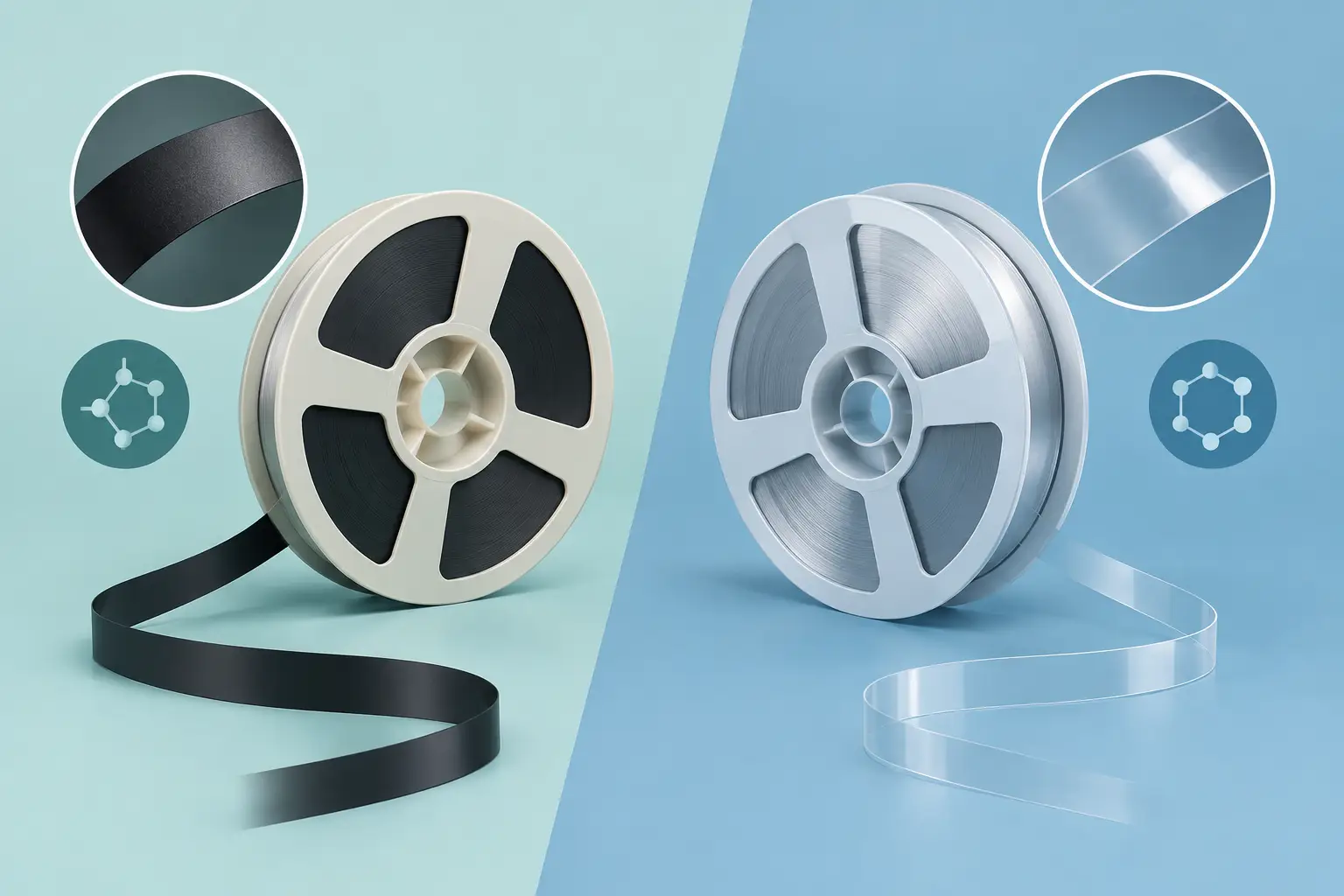
A reel of tape can look perfectly ordinary until the first careful pull reveals its age. Some vintage tape has a crisp, almost paper-like feel and can snap under tension. Other tape feels tougher, more flexible, and may survive decades of handling – though it can bring a different set of storage risks. This acetate polyester comparison explains why the backing material matters before you play, wind, restore, or buy reel-to-reel tape.
The base film is not the magnetic coating. It is the clear support layer beneath the oxide, and it determines much of a tape’s physical behavior. For collectors, recordists, and archivists, knowing whether a reel is acetate- or polyester-backed helps prevent broken tape, damaged recordings, and poor purchasing decisions.
Why Tape Base Material Matters
Magnetic tape has three essential components: the base film, the binder that holds the coating in place, and the magnetic oxide that stores the recording. The base is the structural foundation. It controls tensile strength, stretch, tear resistance, and how safely a reel handles fast winding or transport through a machine.
Acetate was widely used on early recording tape, particularly from the late 1940s through much of the 1950s. Polyester, often called Mylar in the tape world, became the dominant base material as manufacturers sought stronger, thinner, and more durable tape. By the 1960s, polyester had become common across consumer, broadcast, and professional formats.
That broad timeline is useful, but it is not a complete identification method. A tape’s brand, formulation, reel size, box style, and recording history can all complicate the picture. Treat the tape itself as the primary evidence.
Acetate Polyester Comparison: The Practical Differences
The most significant difference is strength. Acetate tape has relatively low tensile strength and is vulnerable to breaking when pulled, especially if it is dry, brittle, spliced poorly, or tightly packed. Polyester tape is substantially stronger and resists tearing far better. That strength made it well suited to long-play formulations, repeated use, and professional handling.
Polyester’s advantage has a trade-off. When a polyester tape catches in a transport, it may not break before placing stress on the machine, the splice, or the recording pack. Acetate often breaks first. A break is frustrating, but it can act as a kind of mechanical fuse. Neither behavior is desirable, which is why clean guides, correct tension, and a properly serviced deck remain essential.
Acetate also feels different in the hand. It is generally stiffer and less springy than polyester. When held up to a bright light, acetate base film can sometimes show a faint translucent or amber character, while polyester may appear clearer. These clues are helpful, not definitive. Do not bend, crease, or aggressively pull a tape to identify it.
A careful tear test has historically been used as an identification shortcut: acetate tends to tear more easily, while polyester resists. For recorded or valuable tape, that is the wrong test. The risk is not worth the answer. Inspect a leader end, a loose tail, or an unrecorded section only if it can be done without sacrificing material.
Acetate Tape: Historic, Valuable, and Fragile
Acetate-backed tape is often found in early home recordings, radio material, field recordings, spoken-word archives, and amateur music sessions. Its age alone can make the content historically important, even when the reel has little collector value as a physical object.
The principal concern is embrittlement. Over time, acetate can lose flexibility and become prone to cracking or snapping. It may break at a splice, at the hub, or in the middle of a recorded passage. A reel that appears fine at rest may still fail under normal playback tension.
Before attempting playback, inspect the pack for uneven winding, curled edges, loose layers, white residue, or obvious breaks. Gently rotate the reel by hand and look for sections that lift, buckle, or resist movement. If the tape is brittle, badly warped, or repeatedly breaking, stop rather than forcing it through the machine.
For acetate reels with unique content, the objective is usually not repeated enjoyment. It is safe transfer. Use a well-maintained machine, conservative handling, and appropriate take-up tension. If the recording is irreplaceable and the tape is clearly unstable, professional archival transfer may be the wiser choice.
Polyester Tape: Tougher Base, Different Preservation Risks
Polyester tape is generally easier to handle because it is strong, flexible, and resistant to tearing. It is also the base material found on many familiar recording stocks from brands such as Ampex, BASF, Scotch, Maxell, and TDK. For active reel-to-reel users, polyester is usually the more practical choice.
However, polyester base does not mean the tape is automatically safe to play. The most widely discussed problem with many later polyester tapes is sticky-shed syndrome, a binder-related failure rather than a failure of the base film itself. Affected tape can squeal, shed oxide, feel tacky, leave deposits on tape guides, or stop moving smoothly through the transport.
That distinction matters. Acetate tape may fail because the backing has become brittle. Polyester tape may be physically strong while the binder holding its oxide coating has absorbed moisture and degraded. A strong backing cannot protect the recording from binder failure.
If a polyester tape squeals, slows down, sticks, sheds heavily, or leaves brown residue on heads and guides, stop playback. Continued running can damage the recording and contaminate the tape path. Some tapes can be stabilized for controlled transfer through established archival conditioning methods, but the exact approach depends on the formulation and condition. It is not a universal repair or a routine preparation step.
How to Identify the Right Handling Approach
The goal is not merely to label a tape acetate or polyester. The goal is to choose the safest next step. Start by checking the reel, box, and any handwritten notes. Original packaging may identify the brand, stock number, tape length, and formulation. Those details often narrow the likely base material and known age-related concerns.
Next, perform a visual inspection in good light. Look at the tape edges and the overall pack. Acetate may show stiffness, edge cracking, cupping, or brittleness. Polyester may show a stable-looking pack even when binder trouble is present, so also watch for residue, tackiness, or an odor associated with degradation.
Then consider the tape’s intended use. A blank reel for a home recording project and a one-of-a-kind family tape should not be treated the same way. If the content is irreplaceable, avoid casual test playback. A few seconds of information is rarely worth risking an entire recording.
For reusable stock, confirm the tape width, reel size, hub type, recording speed, and machine compatibility before loading it. Base material is only one part of tape selection. A 7-inch reel of 1/4-inch polyester tape may be mechanically sound yet unsuitable for your machine’s equalization, intended recording level, or spool capacity.
Choosing Tape for Recording and Collecting
For most users making new recordings, polyester-backed tape is the practical standard. Its durability supports repeated winding, editing, playback, and normal machine use. It is especially well suited to enthusiasts who record frequently or work with higher-output formulations.
Acetate tape remains relevant for collectors and archivists because it represents a major period in recording history. It can contain performances, broadcasts, interviews, and personal documents that exist nowhere else. Its value lies in careful preservation, accurate identification, and transfer planning rather than hard daily use.
When buying vintage tape, do not assume that a clean box guarantees a clean reel. Ask about condition, prior use, spool type, tape grade, and whether the tape has been inspected or refurbished. A trustworthy specialty source should describe what is known, distinguish tested stock from untested material, and help match the reel to your format and purpose.
Reel to Reel Warehouse serves this market with format-specific inventory and the kind of condition knowledge that matters when tape is no longer a simple commodity. Whether you are seeking an empty reel, usable recording stock, or a hard-to-find width, the right choice begins with the tape’s actual condition rather than its age alone.
A reel of acetate deserves patience; a reel of polyester deserves scrutiny. If you approach both with a clean machine, a careful inspection, and a clear plan for the recording, you give the tape its best chance to keep playing for years to come.