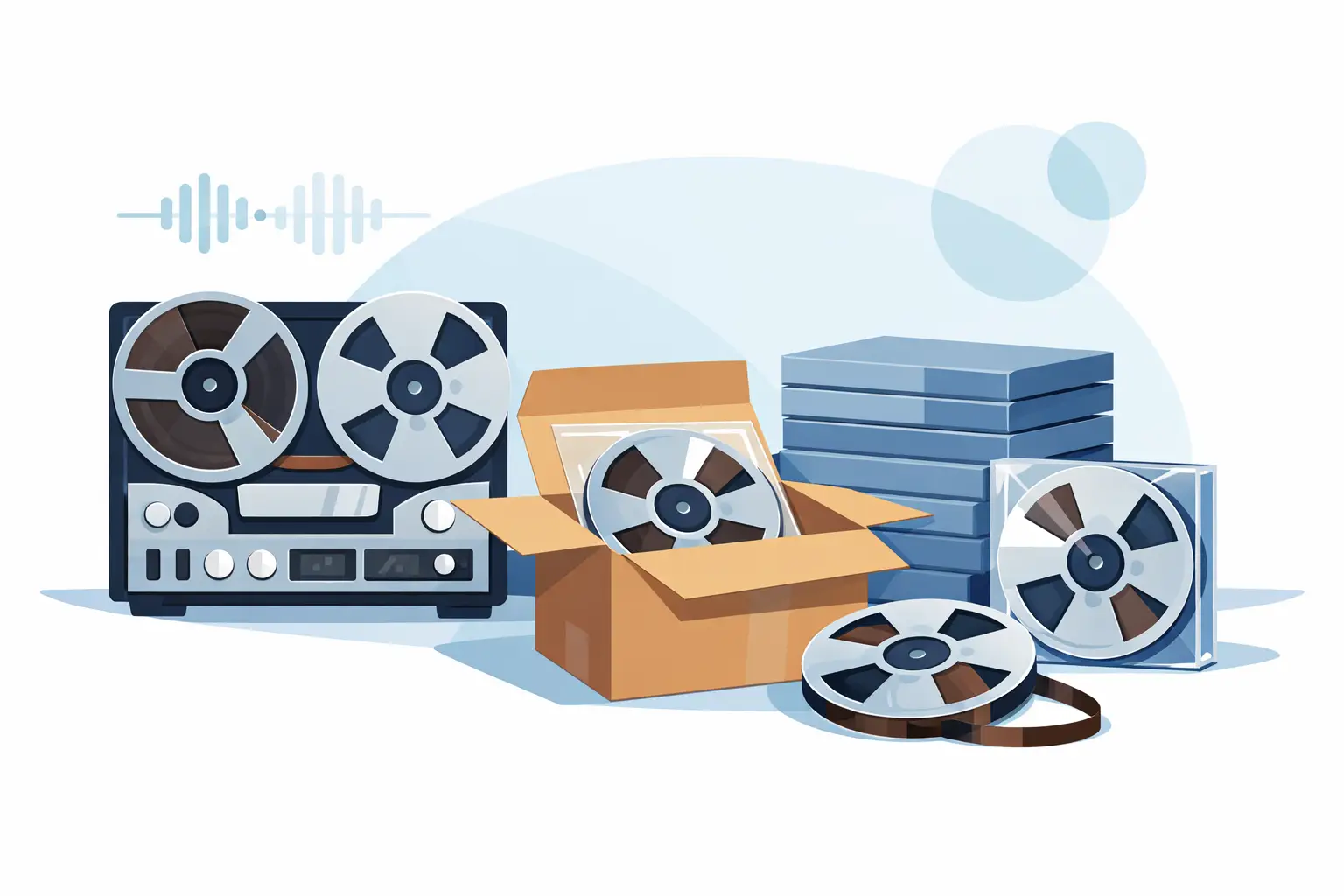
When someone asks for the best tape for archiving audio, the real question is usually more specific: best for what machine, what speed, what track format, and how long does the recording need to remain usable? Archival tape selection is not just about grabbing a respected brand name. It is about choosing a formulation and condition that your deck can handle reliably, then storing it in a way that protects the recording rather than introducing fresh risk.
That matters because tape can fail in more than one way. Some tapes shed oxide. Some bind up from sticky-shed syndrome. Some stretch, print through, or develop edge damage from poor winding and storage. A tape that sounded excellent in a studio in 1978 is not automatically the right choice for preserving spoken word, field recordings, master dubs, or family reels today.
What makes the best tape for archiving audio?
For archival use, the best tape is usually the tape that gives you stable playback and recording performance without pushing your machine beyond its comfort zone. Low drama matters more than bragging rights. You want a formulation with a known history, a reel in verified good condition, and a bias and operating level that suit the recorder you actually own.
That is why many archivists and experienced hobbyists lean toward proven backcoated studio formulations when the deck supports them, but may choose lower output or older-style tape for consumer and semi-pro machines. High-output tape can deliver excellent results, but if your machine was not designed or calibrated for it, you may create more problems than you solve. Overbias, underbias, poor erase performance, and transport strain all work against archival goals.
In practice, an archival tape choice comes down to four things: mechanical stability, chemical stability, machine compatibility, and the actual condition of the reel in front of you. The last point is easy to underestimate. A mediocre formulation in excellent condition is often a safer archival medium than a famous formulation that has storage damage or known binder problems.
Tape condition matters as much as brand
People understandably focus on names like Maxell, BASF, Ampex, Scotch, AGFA, and Quantegy. Those names matter, but condition is just as important. New old stock can be ideal, but only when the storage history has been kind. Refurbished tape can also be a smart option if it has been properly evaluated, graded, and prepared for reuse.
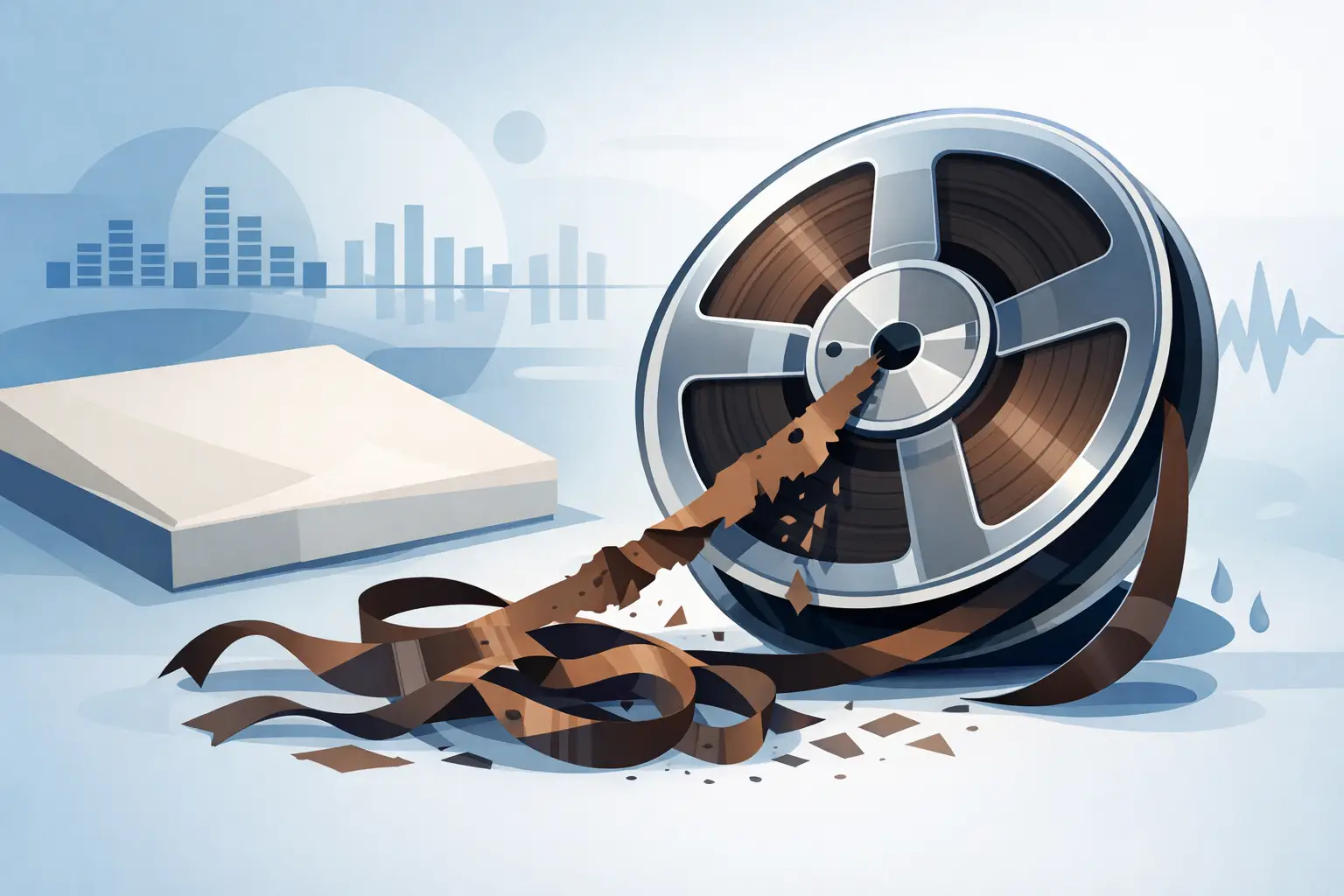
For archiving audio, you should care about whether the tape runs cleanly, winds evenly, and shows no obvious edge curl, pack damage, or contamination. A tape with spoking, cinching, or flaking oxide is not a bargain. It is a future transfer problem.
This is one reason specialist sourcing matters. In the reel-to-reel market, broad selection is helpful, but so is having someone identify tape issues before the customer does. If you are buying for preservation rather than casual experimentation, confidence in grading and replacement support is part of the product.
The most reliable tape types for archival use
If you want a general rule, polyester-backed tape is usually the safest place to start. Polyester is tougher and more dimensionally stable than older acetate stock. Acetate has its place historically and can still survive in collections for decades, but for making new archival recordings, polyester is the more practical choice.
Among polyester tapes, lower-to-mid output formulations often make the most sense for long-term compatibility. They are easier on a wider range of machines and less likely to expose the limits of older consumer decks. If you are archiving on a well-maintained professional machine that has been calibrated to a modern or late-era studio formulation, then higher-output tape may be perfectly appropriate. But that is a machine decision first, not a tape trend decision.
Maxell has a strong reputation in archival conversations because many of its formulations aged well and are still trusted by reel-to-reel users. BASF and AGFA also deserve attention, especially where stable binder systems and dependable long-term handling are concerned. Some later Ampex and Quantegy stocks can perform very well, but certain Ampex families are also associated with sticky-shed issues, so formulation-specific knowledge matters.
That is why there is no single universal answer to the best tape for archiving audio. There are excellent candidates, but the right pick depends on your recorder and your tolerance for maintenance and calibration.
When NOS tape is best and when refurbished tape makes sense
NOS tape has obvious appeal. It is unused, often comes in original packaging, and may offer the closest thing to period-correct recording stock for a vintage machine. For serious collectors and archival users, that can be the cleanest solution.
Still, unused does not always mean problem-free. Decades in poor storage can age tape even when it was never recorded on. Binder breakdown, box damage, and environmental exposure do not care whether the reel was opened.
Refurbished tape can be an excellent choice when it has been carefully inspected and graded. This is especially true for users who need hard-to-find widths, reel sizes, or formulations that are no longer commonly available as NOS. The key is transparency. You should know how the tape was evaluated, what cosmetic or performance limitations it may have, and whether it is recommended for critical recording.
For many buyers, the smartest path is simple: use the cleanest, best-documented stock available in the format your machine prefers, whether that is NOS or properly refurbished.
Matching tape to your machine
A 7-inch home deck running 1/4-inch tape at 3.75 or 7.5 ips has different needs than a studio machine handling 10.5-inch reels at 15 ips. That should guide every archival purchase.
Older consumer machines often perform best with standard-bias, moderate-output tape that does not demand aggressive calibration changes. These decks may not erase or bias hotter formulations properly, and some do not have the transport strength for heavier backcoated stock. If your goal is to preserve a family archive or create stable listening copies, a conservative tape choice is often the right one.
Professional and semi-pro decks open up more options. If the machine is serviced and aligned, it can take advantage of stronger formulations with better signal-to-noise performance. But even then, the archival question is not just sound quality. It is repeatability. Can you make clean recordings, play them back consistently, and trust the machine not to chew through a rare reel?
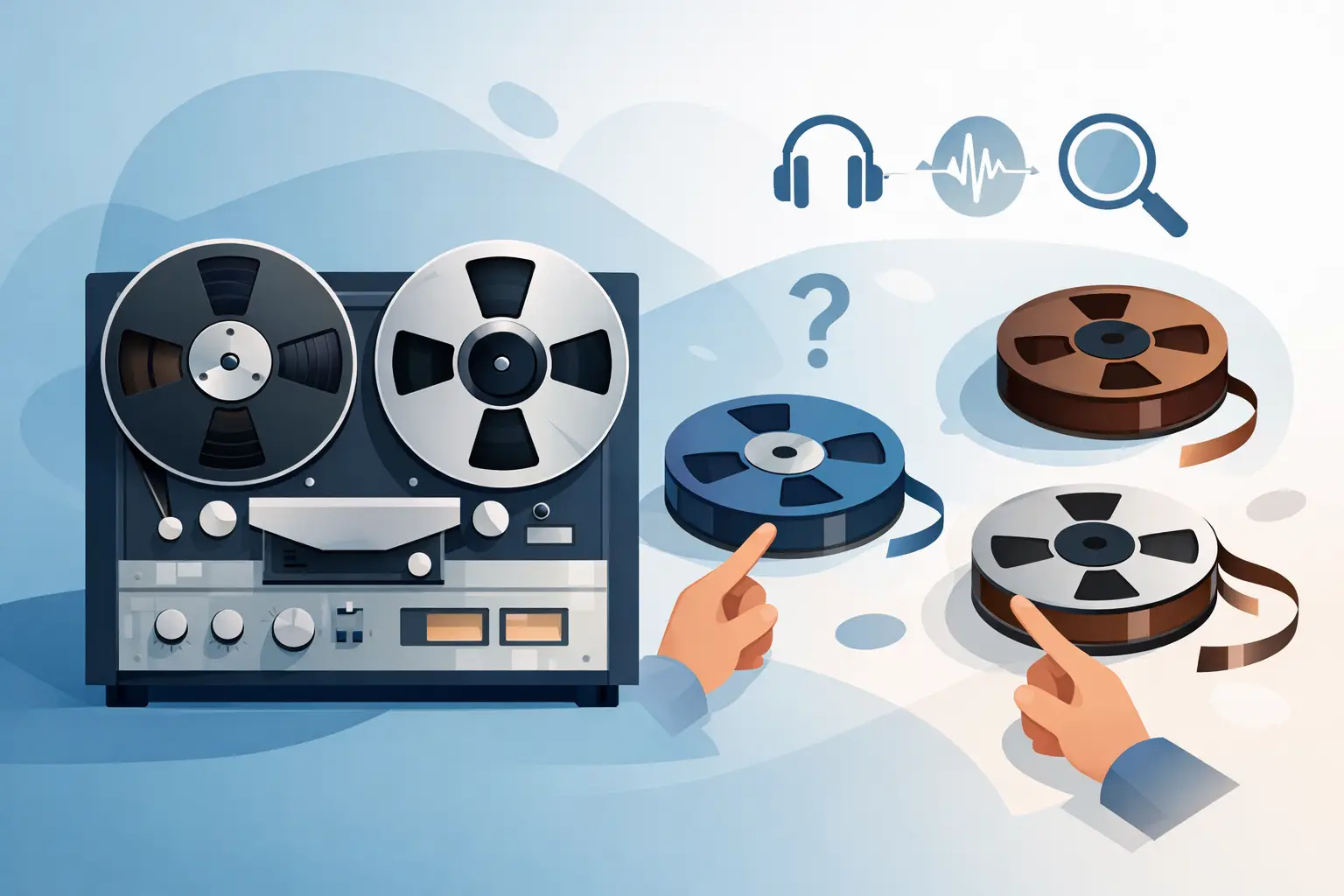
If you are unsure, start with the machine manual, then compare that with what the deck has been calibrated for in real-world use. The tape your recorder likes is often a better archival medium than the tape internet lore says is best.
Red flags to avoid when buying archival tape
There are a few situations where you should slow down. One is buying tape based only on nostalgia. Another is assuming every sealed reel is safe. A third is ignoring known formulation issues because the price looks good.
Watch for tapes associated with sticky-shed, especially if the seller cannot identify the exact stock. Be cautious with reels showing poor pack, edge damage, mold, or residue. If a listing is vague about whether a tape is used, bulk erased, tested, or graded, that uncertainty is part of the risk.
Archiving is one area where cheap tape gets expensive fast. A bad reel can waste studio time, contaminate guides and heads, and put a unique recording at risk.
A practical recommendation for most buyers
If you are making new archival recordings, choose a known stable polyester tape from a reputable brand family, in a condition that has been clearly evaluated, and match it to your machine rather than forcing your machine to match the tape. For many users, that means trusted NOS stock where available or well-graded refurbished tape from a specialist supplier.
If you are preserving existing recordings rather than creating new masters, your first priority is safe playback and transfer. In that case, the best tape for archiving audio may actually be the destination format you use after transfer, with reel tape serving as the original source that must be handled carefully and as little as possible.
Reel-to-Reel Warehouse has built its reputation around exactly this kind of practical decision-making: helping buyers sort through brands, widths, condition grades, and hard-to-find stock without guessing.
The right archival tape is rarely the flashiest reel on the shelf. It is the one that runs true, matches the machine, and gives your recording a better chance of still being there the next time someone threads it up.